

Pipe Burst at Home in Cleburne? What to Do in the First 30 Minutes
A burst pipe is a plumbing emergency where every minute the water runs unchecked adds damage. A half-inch supply line under normal residential water pressure can release a large volume before you reach the main shutoff. The good news is that the steps you take in the first thirty minutes, specifically stopping the water, getting to safety, documenting the damage, and starting to remove standing water, make an enormous difference in how much of your home needs repair afterward. Here is exactly what to do.
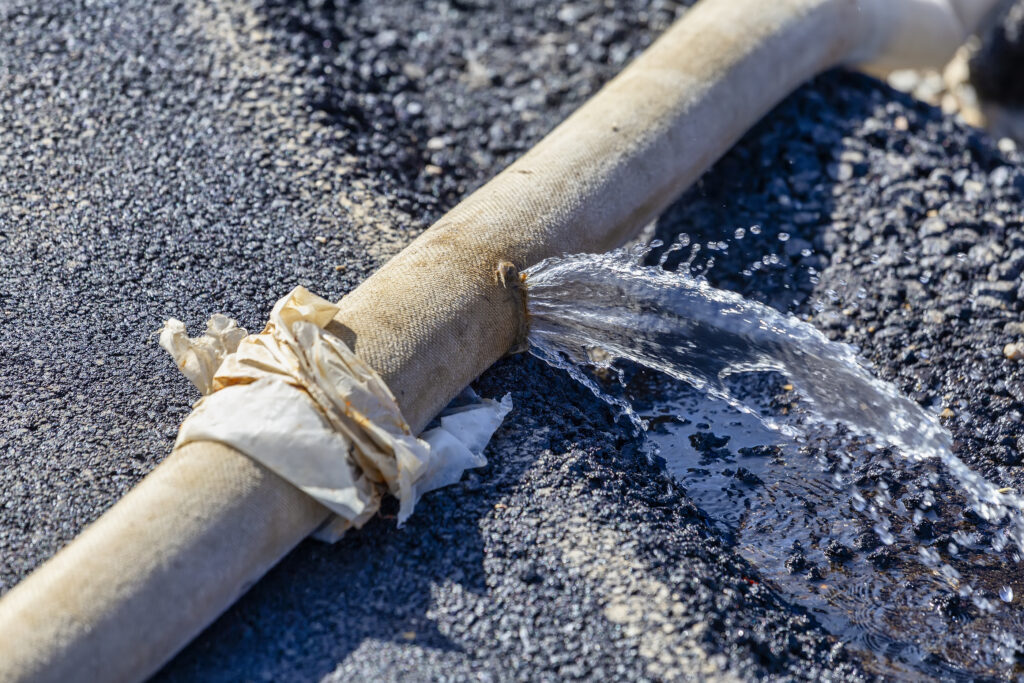
Step 1: Find the Main Water Shutoff and Turn It Off First
Before anything else, stop the water. In most Cleburne and surrounding-area homes, the main shutoff valve is in one of two locations: inside the home where the supply line enters the foundation, often near the water heater, in a utility room, or beneath the kitchen sink; or in a ground-level meter box near the street, which requires a flat-blade tool or a meter key to operate.
Turn the inside valve fully clockwise until it stops. If the valve is an older gate-style valve (multi-turn), it may take several rotations. Newer ball valves take only a quarter turn. If the inside shutoff is stuck, corroded, or inaccessible, go directly to the street-side meter box. Your municipal water utility can also be reached for emergency shutoff assistance, though the in-home valve is faster in most cases.
Once the main is off, open a cold water faucet anywhere in the house to relieve remaining pressure in the lines and help them drain down faster. This is one of the most overlooked steps, and it significantly reduces how much water continues flowing into the damaged area. If a shutoff valve or angle stop in your home is visibly corroded or refuses to turn, that is a separate repair our team can handle when we arrive. For more on supply valves and what goes wrong with them, see our plumbing fixtures service page
Step 2: Turn Off Electricity in Any Room With Standing Water
Water and electricity in the same space create a serious hazard. Before you walk into a room with standing water, go to your electrical panel and turn off the breakers for any area that is affected. If you are not sure which breakers cover the flooded zones, and especially if water is near the panel itself, stay out and wait for emergency responders or your utility company to confirm it is safe.
Do not use any electrical outlets in wet rooms, do not run appliances that have been sitting in water, and do not plug in fans or dehumidifiers in flooded areas until power to those areas has been confirmed off. This is not overcaution. Water damage claims that include electrical incidents are significantly more expensive to remediate than water damage alone.
Step 3: Document Everything Before You Start Cleanup
Once the water is off and electrical safety is confirmed, take five minutes to document what you see before moving anything. Use your phone to photograph and video the source of the break, the extent of standing water, any visible damage to walls, floors, and ceiling materials, and the current condition of your belongings in the affected area.
This documentation serves two purposes: it establishes the scope of damage at the moment of discovery for any insurance claim, and it helps your plumber understand exactly what happened and what was affected when they arrive. Insurance adjusters also look at whether the homeowner took reasonable steps to stop the water and document conditions promptly, so this step directly supports your claim.
According to the U.S. Environmental Protection Agency, household leaks can account for more than one trillion gallons of water waste nationally each year. A burst pipe is on the end of that spectrum, releasing water at a rate that can saturate structural materials before any visible pooling appears. The faster you act, the less material ultimately needs replacing.
Step 4: Remove Standing Water Immediately
Time is the biggest driver of total repair cost after a pipe bursts. Water that sits on wood subfloor, drywall, or insulation begins degrading those materials and creating conditions for mold growth within 24 to 48 hours. Even in a Texas July, getting water off surfaces quickly makes a measurable difference in what can be dried and saved versus what needs to be replaced.
Use whatever you have: towels, a mop, a wet-dry shop vacuum. Move furniture and rugs out of standing water. Pull up any saturated area rugs. If the water reached a finished floor, getting it off the surface is more important than worrying about the finish itself. Your goal in the first thirty minutes is to move as much bulk water as possible before a professional water damage team or your plumber arrives.
What Not to Do After a Pipe Bursts in Your Home
These are the mistakes that consistently turn a manageable burst pipe into a much larger repair:
- Turning the water back on to check if the pipe fixed itself. It did not.
- Using electrical appliances or outlets in any wet room, even after the standing water is gone.
- Assuming a slowed drip means the problem is contained. Pressure in the line drops when flow finds another path, which often means water is still moving somewhere you cannot see.
- Leaving wet drywall, insulation, or subfloor materials undisturbed for more than 24 hours and hoping they will dry on their own. In a Texas summer with high humidity, they will not.
- Applying tape or patch kits as a permanent fix without professional inspection of the surrounding pipe. A corroded or stressed line that burst once has likely weakened at other points too.
- Delaying the call to a plumber because the active dripping has stopped. The water is going somewhere.
Why Burst Pipes Happen in Cleburne Homes During Summer
Most homeowners in North Texas associate burst pipes with the rare hard freeze. The reality is that summer brings its own set of pipe failure triggers, and several of them are particularly relevant to homes across Cleburne, Burleson, Kennedale, Benbrook, and the surrounding Johnson County and DFW metro area.
North Texas sits on expansive Blackland Prairie clay soil. In July, drought conditions like those Cleburne is experiencing right now, that clay shrinks and pulls away from buried pipe sections, shifting their alignment and opening joints that had been stable for decades. The same soil that swells against pipes in a wet spring now contracts and leaves them unsupported. According to the Texas Commission on Environmental Quality, North Texas regularly cycles between drought and heavy rainfall, and that variation in soil moisture is one of the primary forces acting on underground plumbing.
The second factor is pressure. Summer irrigation schedules, outdoor water use, and municipal supply demand all elevate household water pressure beyond normal baseline levels. Homes with water pressure regulators that are past their service life may not be limiting pressure effectively anymore. Older homes in Cleburne’s established neighborhoods that still carry original galvanized supply lines face an additional risk: galvanized steel corrodes from the inside over time, building internal scale deposits that narrow the pipe, create pressure differentials, and eventually give way without any external warning signal.
Thermal expansion is a third summer-specific factor. Water in a closed plumbing system expands when it heats up. In a home without a properly functioning expansion tank, the pressure that expansion generates has nowhere to go, and it concentrates at joints and connections that have already been weakened by age or corrosion. Our burst pipe repair team sees this pattern consistently in summer service calls, particularly on homes where the water heater was replaced but the old expansion tank was not.
Cleburne’s Water Infrastructure and Older Homes
Many homes built across Cleburne and the surrounding communities before the mid-1990s were constructed during an era when galvanized steel and early copper were the standard supply line materials. The City of Cleburne’s own records reflect a water system that serves a mix of newer and established residential construction across Johnson County and the broader service area. The water itself, which runs six to ten grains per gallon of total hardness, accelerates internal scale accumulation in metal pipes, shortening the window before a corroded section fails.
For homeowners in older Cleburne neighborhoods, an annual visual inspection of accessible supply lines under sinks and near the water heater is a reasonable baseline for catching deterioration before it becomes a burst emergency. If lines look rust-colored, are visibly flaking, or have already been patched once, a proactive replacement conversation with a licensed plumber is worth having.
When the First 30 Minutes Are Over: What Comes Next
Once you have shut off the water, secured electrical safety, documented the damage, and removed standing water, the next call is to a licensed plumber. Burst pipe repair is not a DIY-appropriate repair for most homeowners, and attempting it without professional assessment risks missing adjacent damage, using non-code-compliant materials, or failing to catch a corroded section that will fail again in the same location.
If the burst resulted in significant water penetration into walls or floors, a professional water mitigation service should also be contacted. They have the industrial drying equipment and moisture meters needed to confirm structural materials are fully dry before walls are closed up, which is the only way to prevent a hidden mold problem from developing after the plumbing repair is complete. For any plumbing emergency in Cleburne, Burleson, Benbrook, Fort Worth, or the surrounding DFW area, our water leak detection team can confirm the full scope of the breach before repair work begins, and our emergency plumbing line is staffed around the clock.
When to Call Finntastic Plumbing
Finntastic Plumbing is a licensed, insured plumbing company licensed through the Texas State Board of Plumbing Examiners and rated A+ with the Better Business Bureau. Our technicians are background-checked and available 24/7 for emergency calls. For a burst pipe emergency in Cleburne, Fort Worth, Burleson, or anywhere across our Johnson County and DFW Metro service area, call 817-899-7315 or contact us online. Our emergency line connects directly to a licensed plumber who can assess your situation and dispatch a team as quickly as possible. For additional details on what our burst pipe repair service covers, visit our burst pipe repair service page.
FAQs About Burst Pipe Repair in Cleburne, TX
How do I know if a pipe has actually burst and not just started leaking?
A burst pipe usually means a sudden, dramatic change: a noticeable drop in water pressure throughout the home, water appearing rapidly on walls, floors, or ceilings, or a visible wet spot growing quickly. A slow leak builds gradually and often goes undetected for weeks. If you hear water running when every fixture is off, or if your water meter is spinning with everything closed, you have an active loss somewhere in the system, and getting the main shutoff closed immediately is the right first move regardless of whether it is a burst or a slow leak.
Where is the main water shutoff valve in a typical Cleburne home?
In most Cleburne and surrounding-area homes, the main shutoff is either inside the home where the supply line enters the foundation, or in a ground-level meter box near the street. Inside shutoffs are common near the water heater, in a utility room, or under the kitchen sink in older construction. The street-side shutoff in the meter box requires a flat-blade tool or a meter key to operate and is always an option if the inside valve is inaccessible or stuck.
Do I need to turn off the water heater when a pipe bursts?
Yes. Once the main water supply is off, turning the water heater to the off position or pilot setting prevents the burner from firing against an empty or draining tank, which can damage the heating element in electric units or the heat exchanger in gas tankless units. For a standard gas tank water heater, turning the thermostat to the pilot or vacation setting is sufficient. Your plumber can confirm the correct steps for your specific unit when they arrive.
Should I try to patch a burst pipe myself before the plumber arrives?
Temporary measures like rubber-padded pipe clamps or plumber’s tape can slow an active drip at an accessible pipe section while you wait for a licensed plumber, but they should not be treated as a permanent repair. More importantly, do not attempt any repair on a pipe you cannot see or access clearly, on anything involving gas lines, or on any section where the failure is at a joint or fitting rather than mid-pipe. A plumber needs to see the original condition of the break to properly diagnose whether the surrounding pipe is compromised.
How much water damage can a burst pipe cause in 30 minutes?
The amount of water released depends on the pipe diameter and your household water pressure, but even a small half-inch supply line under typical residential pressure can release significant volume before the main shutoff stops it. The more important factor is where the water goes: water that reaches a subfloor, wall cavity, or ceiling begins causing structural damage and creating conditions for mold growth within 24 to 48 hours. Acting in the first 30 minutes, specifically getting the water off and starting to remove standing water, is the most important thing a homeowner can do to limit total repair scope.
My pipe burst behind a wall and I cannot see it. How do I find where it is?
When a pipe fails behind a finished wall, the first visible signs are often water stains spreading on drywall, bubbling or peeling paint, or a wet spot on the floor directly below the damaged section. Our water leak detection team uses acoustic listening equipment and thermal imaging to locate hidden pipe failures without opening every wall section. Once we confirm the source location, the repair is much more targeted and the damage to the wall itself is minimal.
Will my homeowner’s insurance cover a burst pipe?
Most standard homeowner’s insurance policies cover sudden and accidental water damage from a burst pipe, but they typically do not cover damage resulting from a slow leak that was ignored over time or from deferred maintenance on pipes that had obvious signs of deterioration. Documenting when you discovered the break and what immediate steps you took to stop and mitigate the damage is important for any claim. Your policy documents and your insurance agent are the right sources for the specifics of your coverage.
Why did my pipe burst in summer? I thought that only happened in freezing weather.
Freeze-related pipe bursts get more media attention, but pipes fail year-round for reasons that have nothing to do with cold weather. In Cleburne and the surrounding DFW metro area, summer pipe failures most often trace to North Texas’s expansive clay soil shrinking in the July drought and shifting underground pipe positions, elevated water pressure from summer irrigation and outdoor water use, thermal expansion in older copper or galvanized lines from summer heat, and corroded galvanized supply lines in pre-1990 construction that reach the end of their structural life without warning.
Can I stay in my home after a pipe bursts?
Whether you can safely stay depends on where the water went. A burst in an accessible area that you have contained and dried quickly is different from a burst that sent water into the electrical system, flooded a finished basement, or soaked the subfloor. If any water reached electrical outlets, the panel box, or wiring, the power to that portion of the home should be off until an electrician confirms it is safe. If you are unsure about electrical exposure or if there is standing water you cannot remove, staying elsewhere until the situation is professionally assessed is the right call.
What causes pipes to burst in older Cleburne homes specifically?
Cleburne and Johnson County have a meaningful share of homes built in the 1960s through 1980s that still carry original galvanized steel supply lines. Galvanized pipe corrodes from the inside over time, narrowing the interior diameter, building pressure in sections with corrosion buildup, and eventually developing pinholes or ruptures without any external warning. The combination of aging materials, North Texas hard water, which accelerates internal scale buildup, and the clay soil movement that stresses underground sections makes older local homes more vulnerable to burst pipe events than newer construction with PEX or copper lines.
Is it safe to flush toilets or use faucets after a pipe has burst?
Once the main water supply is off, the remaining water in the pipes will drain or be used up quickly. Running faucets after the main is off is actually helpful to relieve pressure and empty the lines faster, which limits how much water continues to flow into any damaged area. Do not turn the main water back on until the damaged section is repaired and inspected, since restoring pressure to a broken line extends the damage and makes the eventual repair more complicated.
How long does burst pipe repair typically take?
A straightforward burst at an accessible supply line typically takes a few hours, including the repair itself and a pressure test to confirm the system is sealed before the main is restored. A burst in a buried line, inside a wall cavity, or involving a section of corroded pipe that requires a longer replacement run can take longer. We give you a realistic time estimate after assessing the break location and the condition of the surrounding pipe before we begin.
What is the difference between a burst pipe and a slab leak?
A slab leak is a specific type of pipe failure where a supply or drain line running beneath the concrete slab foundation develops a leak. The symptoms can be similar to a burst pipe, including unexpected wet spots, running-water sounds when everything is off, and unexplained pressure drops, but the source and repair approach are different. If you suspect the leak may be originating below the slab rather than at an above-grade supply line, our water leak detection team can use acoustic and thermal tools to confirm the location before any excavation or repair begins.
Does Finntastic Plumbing respond to burst pipe emergencies 24/7?
Yes. Finntastic Plumbing maintains a 24/7 emergency plumbing line for exactly this type of call. Burst pipes do not follow business hours, and the damage compounds with every hour the water flows unchecked. When you call our emergency line, you reach a licensed technician who can assess the situation and dispatch a team to your Cleburne, Johnson County, or surrounding DFW area home as quickly as possible.
Can a burst pipe lead to mold growth in my home?
Yes. Mold can begin developing in wet structural materials, drywall, insulation, and subfloor within 24 to 48 hours under the right temperature and humidity conditions, both of which are consistently present in a Texas summer. Getting water off surfaces and out of wall cavities quickly is the most important factor in preventing mold colonization after a burst. If the water soaked into finished walls or flooring and stayed wet for more than a day before being addressed, a professional water damage assessment is worth scheduling before drywall repairs or repainting begin.